From Confusion to Clarity: Learn Beyond Boundaries
Opening Our Course: "Bouquet Assembly Skills for Life and Work"
Welcome to Bedinu, where learning isn’t just about code—it’s about people helping people grow in a space shaped by curiosity and real connection. Whether you’re exploring flower arranging courses for the first time or stepping into a floristry class to sharpen your skills, you’re in the right place. We think the best education happens when everyone brings something to the table, so if you’re hoping to find both guidance and good company, you’ll feel at home here. Honestly, I’ve seen firsthand how sharing what you know—no matter how small—can spark real progress. Got a question or a wild idea? Toss it into the mix. Here, you’ll find courses rooted in community wisdom, not just textbooks. Dive in, make mistakes, ask questions, and let’s see where this journey takes us together.
Bouquet Skills Unveiled
-
Teacher certifications
12+
-
Educational technology
99.8% digital
-
Learner community
8,300+
-
Completion rates
92%
-
International reach
27
-
Teaching approaches
3

Step Inside—Discover the Art of Bouquet Crafting
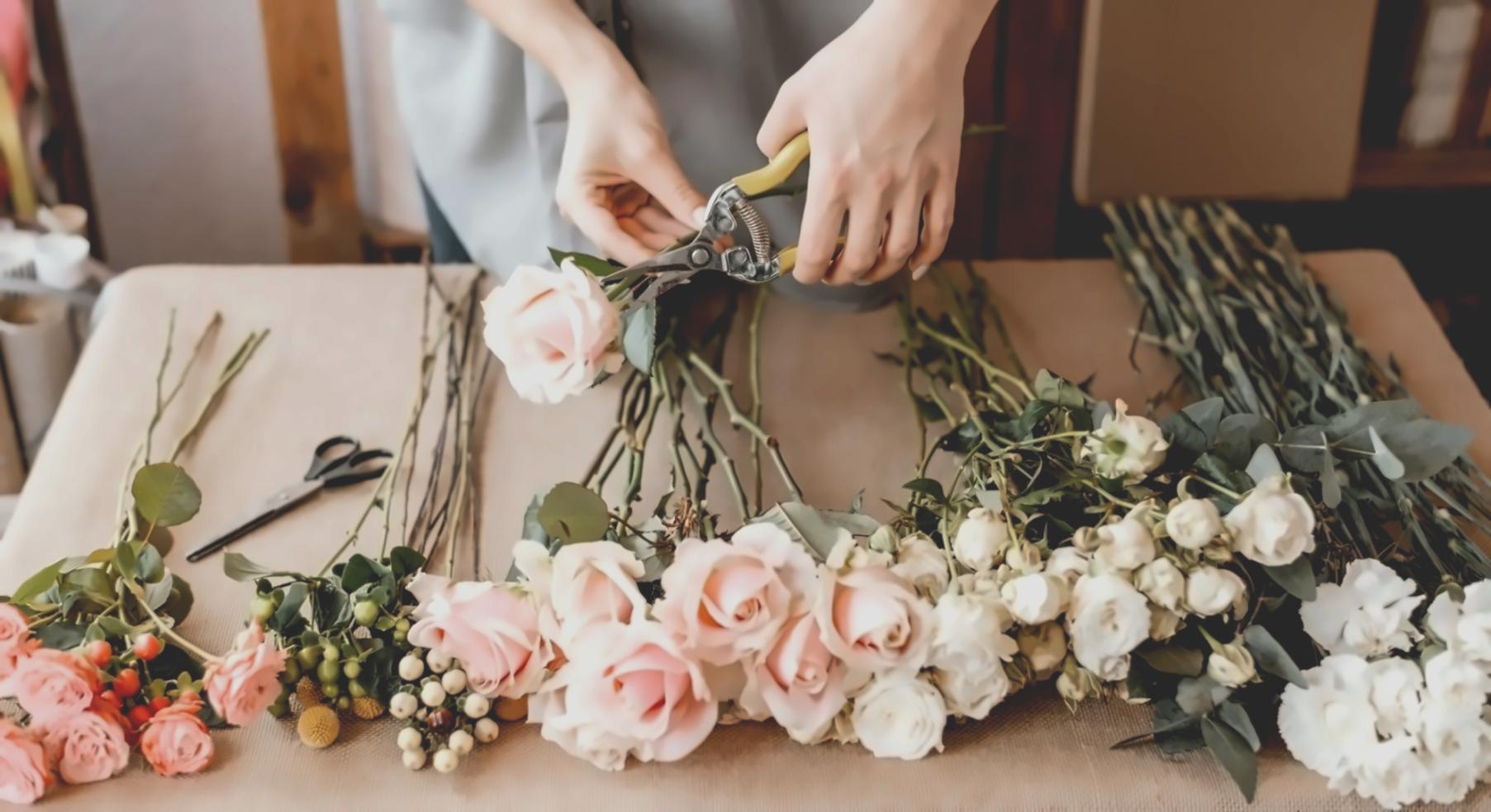
The way we approach bouquet assembly at Bedinu doesn’t really follow the old classroom blueprint—if you’ve ever been in one of those rooms, you’ll know what I mean. The process isn’t just about learning the steps, but feeling out the rhythm that comes from actually doing the work, hands in the stems, listening for that subtle click when something falls into place. Early on, it’s usually linear—first the basics, then a cautious layering of color and texture. But pretty quickly, the path loops back on itself. People find themselves revisiting a spiral wrap or a focal flower placement because suddenly, the way they saw it in week one doesn’t quite fit what they’re holding now. There’s a tension between method and instinct here, the kind that can’t be diagrammed in a lesson plan. It’s the breakthrough moments that stay with me. Someone’s struggling with balance, and then all at once, they notice how the weight of a single eucalyptus stem shifts the whole bouquet. Or someone who’s always believed in symmetry suddenly leaves a tulip sticking out at an odd angle—and it works, because it feels alive. Not everyone gets there at the same time, or even in the same way. Some people start applying what they learn to wedding work, some just want to make joy for their kitchen tables, and a few get fixated on mastering the perfect hand-tied spiral, their fingers stained green and sore by the end of a long afternoon. There’s a kind of humility in watching people discover how little the “rules” matter once you’re really looking at what’s in front of you. We’ve seen folks get stuck, too—sometimes the only way out is to strip everything back and start again. And yet, even with all our adjustments and real-world practice, there are limits. No course (ours included) can re-create the way your hands tremble a little the first time you try to wrap raffia around a wild bundle without crushing it. The real world, with its unpredictable stems and last-minute requests, will always throw something new. But perhaps most importantly, the gaps we saw between traditional teaching and actual floral work—those tiny spaces where intuition lives—are what shape the way we teach. I remember someone once spent nearly an hour just choosing foliage, muttering about “the right kind of green.” That attention, that slow wrestling with the material, is where the real learning happens.
Learning Plan Options
We know every student’s situation is a little different—that’s why our pricing isn’t one-size-fits-all. From a complete floristry course to focused modules in floral design, we guide you through every stage of flower arranging with the same commitment to quality teaching and real support. I’ve seen firsthand that what matters most is finding something that truly fits your goals and pace, not just your budget. Take a look and see what feels right for you. Choose from these thoughtfully crafted educational options:
-
Advanced
The “Advanced” pathway tends to suit people who already know their way around basic bouquet structures but want to get into trickier arrangements—spiral binding, working with stubborn seasonal stems, and the sorts of combinations you can’t just Google. What matters most to folks who pick this is usually the freedom to experiment, honestly—less following along, more testing what actually works in their own hands (one participant last spring spent half an hour figuring out how to get peonies to stay upright without wire, which, if you’ve tried, you know is a little feat in itself). You’ll notice more open-ended challenges here, and more room to make mistakes—sometimes you find out what you like by making a bit of a mess. The feedback is specific, too; it’s not just “nice color choice,” but “try turning the stems just a little tighter, see how it holds.” If you’re already comfortable with the basics but keep finding yourself wishing for something a bit more nuanced—maybe you’ve gotten frustrated with bouquets that look too stiff or just don’t quite land—this level might feel right. And there’s a satisfaction in those little breakthroughs, even if it takes a few attempts.
370 $ -
Basic
The “Basic” participation format keeps things straightforward: you’ll have access to the foundational bouquet assembly methods we’re developing, which means you get all the core instructions and updates as they’re refined in real time. And yes, you can contribute feedback—though it’s more about following along and sharing thoughts when you have them than about shaping the direction itself. For someone wanting to be in the loop without a big commitment, it’s a way to stay connected and see the essentials, without the pressure of hands-on involvement. Sometimes, just being part of the conversation (even from the edges) has its own value.
270 $

Experience Growth: Evolve Your Potential
-
Greater awareness of online learning engagement techniques
-
Advanced skills in designing engaging online learning activities
-
Advanced facilitation of online group problem-solving
-
Improved understanding of online learning community knowledge management
Journey through Our Digital Curriculum
When you first dive into online bouquet assembly lessons, there’s this curious blend of hands-on discovery and digital connection that shapes the experience. I remember my own first virtual session—awkward at first, honestly, since I wasn’t sure if my makeshift workspace (read: kitchen table covered in newspaper) would cut it. But you quickly realize that learning bouquet assembly online isn’t about having a fancy studio—it’s about finding your rhythm with the materials in front of you, pausing and rewinding the video when you need to, or just chatting with an instructor in real time when your rose spiral looks more like a tumbleweed. I’ve seen students improvise with whatever flowers are available locally, sharing snapshots of their progress in group chats, swapping tips, and sometimes laughing about the chaos that comes with snipping stems on a busy morning. And sure, it’s not quite the same as standing shoulder to shoulder in a classroom, but there’s a certain freedom in being able to move at your own pace—rewatching demonstrations, replaying tricky techniques, and even taking breaks to hunt down that elusive pair of floral shears (or, let’s be honest, the kitchen scissors you stole from your roommate). The best moments come when someone posts a photo of their finished bouquet, a little uneven but beaming with pride, and you realize that this process—messy, creative, and sometimes unpredictable—is where the real learning happens.Learn at your own pace with our online study options.
The Professional Network
Bedinu
Angelo
When students at Bedinu ask about bouquet assembly methods, they find themselves in Angelo’s classroom, where the tables are always a little too crowded with stray stems and half-finished arrangements. He doesn’t just run through steps—he asks why you paired those ranunculus with eucalyptus, and what you think that says about seasonality. Some people say he’s got a knack for drawing out those weird connections between color theory and, say, the Fibonacci sequence, which sounds off-topic until you see how spirals actually show up in petal arrangements. There’s a kind of groundedness in his teaching that appeals especially to adults—he trusts you to bring your own experience, and doesn’t pretend he’s got all the answers. Angelo’s background? He’s been around long enough to remember when foam blocks were the norm, and he’s not afraid to show old catalogues from the 90s just to make a point about how things have changed. The classroom itself is a bit cramped, plants trailing over battered bookshelves, but somehow that makes people relax. Sometimes, he’ll stop to point out that the smell of wet floral tape always reminds him of his first job, and you can see students mentally filing that away. He keeps in touch with a small crew of florists and event designers—one of them recently sent him a photo of a bouquet built only from foraged weeds, which he passed around during class to get everyone thinking. People mention in their evaluations that Angelo makes you rethink what you thought you knew, but you walk away feeling like maybe you’re better at this than you realized. There’s no showmanship, no big promises. Still, the way he teaches sticks with you.
Reach Out
25 Erskine St, Sydney NSW 2000, Australia
+61402949366